


2025 Buyer's Guide for Composting Granulation Equipment
2025-12-13For established operators, agri-businesses, and serious investors, selecting composting granulation equipment in 2025 is a strategic decision about maximizing Return on Investment (ROI), future-proofing operations, and capturing market value. This guide moves beyond basics to analyze the technological and economic drivers that separate a functional plant from a competitive, profitable asset.
1. The 2025 Market Driver: From Commodity to Specialized Products
The market is shifting from generic "organic fertilizer" to value-added products. Your equipment must enable this.
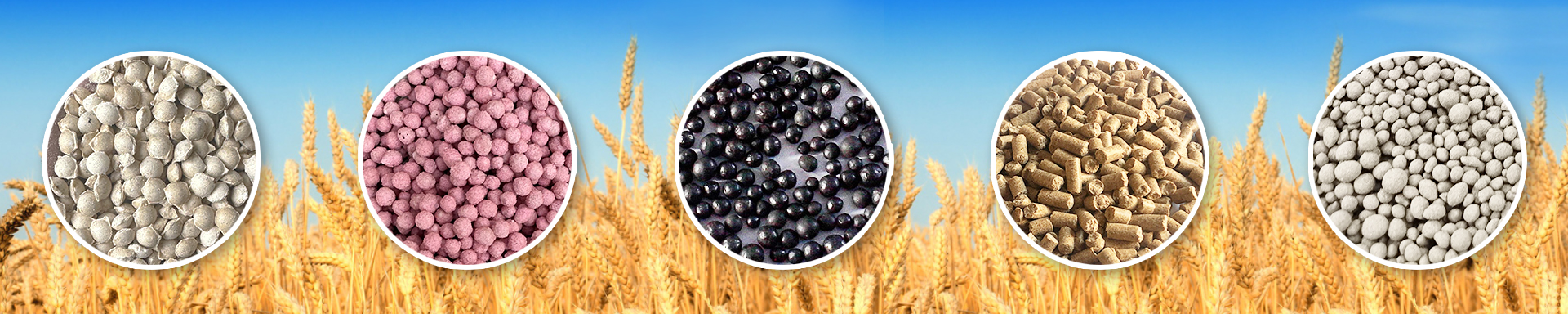
Pellet Quality for Niche Markets: To command premium prices in horticulture, turf, or organic viticulture, you need perfectly spherical, dust-free, and strong pellets. This requires precision wet granulation with a polishing drum and coating machine post-drying. A standard disc pelletizer may suffice, but a drum granulator with a particle size recycling system offers superior consistency for high-value output.
Formulation Flexibility: Can your system accurately blend and granulate compost with added biochar, micronutrients, beneficial microbes, or mineral powders? A programmable batch mixer before granulation and a roller press granulator (which excels at dry blending) are key for creating proprietary, high-margin formulas.
Consistency is Brand: For large contracts, every batch must be identical. Invest in automated weighing and batching systems feeding the granulator, and online moisture detectors adjusting the dryer in real-time. This level of control justifies the investment in a sophisticated fertilizer production line.
2. Advanced Technology Deep Dive: Optimizing the Core Process
Fermentation Pre-Processing: The quality of granulation starts here. For large-scale, year-round production, consider a closed aerobic fermenter (horizontal fermentation tank). It ensures faster, more uniform compost stabilization in any weather, providing a consistent feed stock for your granulator, which is critical for high-quality output.
Granulation Technology Trade-Offs:
High-Capacity Drum Granulation: For outputs >10 tons/hr, the rotary drum granulator is the industry workhorse. The 2025 focus is on internal lifting flight design for optimal material cascading and liners that reduce adhesion. Look for models with variable frequency drives for precise speed control.
Roller Press for Innovation: The double roller extrusion granulator is no longer just a "dry" option. It's the tool for creating unique compound organic-mineral fertilizers. By blending powdered compost with mineral nutrients (like phosphate rock powder) and pressing them, you create a homogenous, slow-release product impossible to make with wet methods.
Post-Granulation Value Addition: The profit is often in the finish. A fluidized bed cooler is more efficient than a rotary cooler. An automatic coating drum allows you to apply anti-caking agents, dust suppressants, or hydrophobic coatings, enhancing shelf-life and performance.
3. The ROI Equation: Analyzing Total Cost & Value
Think in terms of cost per ton and product value per ton.
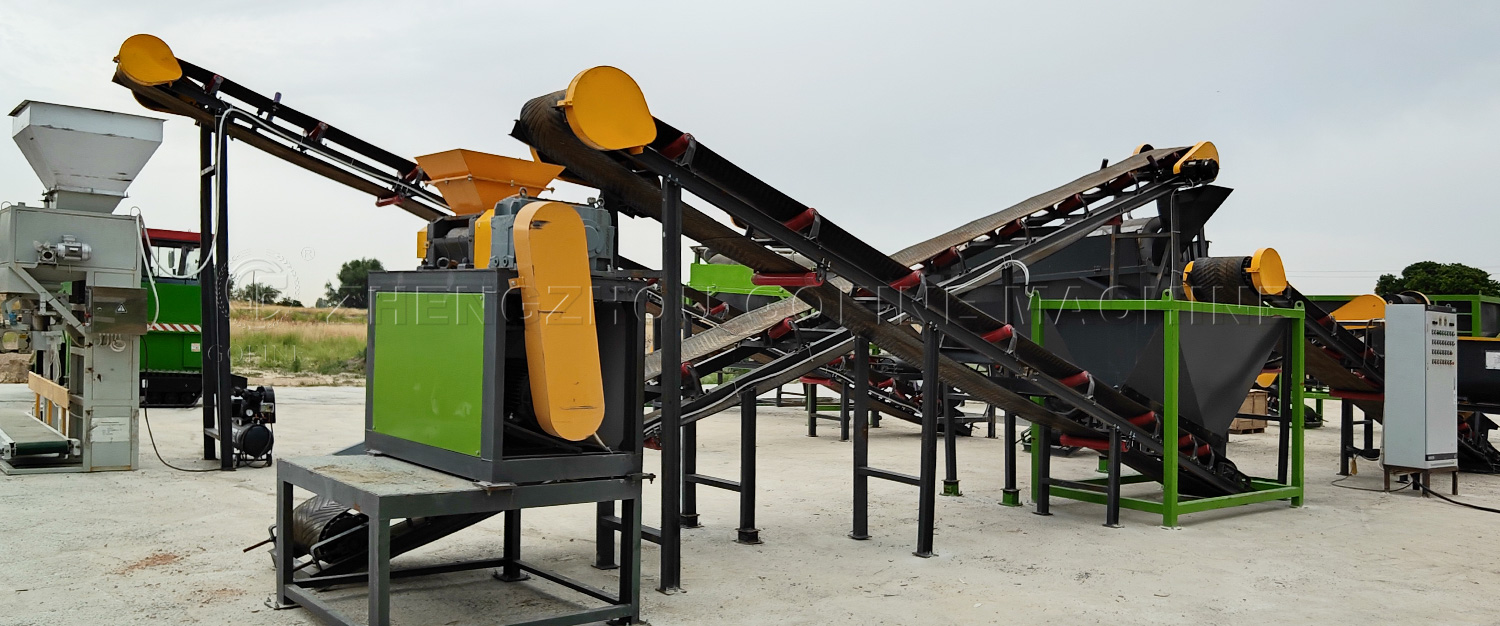
Capital Expenditure (CapEx): A full wet granulation line (with fermenter, crusher, granulator, dryer, cooler, screener, coater, packer) has a higher upfront cost than a dry granulation line. However, its product typically sells for 15-30% more.
Operational Expenditure (OpEx):
Energy: Dryers are the largest energy sink. 2025-leading systems use heat recovery from coolers and high-efficiency burners. Calculate the drying cost per ton based on local fuel prices.
Labor: Automated batching, packing, and palletizing reduce labor costs and human error. An automated line may require 2-3 operators instead of 6-8.
Maintenance: Granulators and crushers have wear parts. Request expected service life and cost for rollers, dies, and hammers from your supplier. Easy-access designs save on downtime.
The Payback Analysis: Model your business. If a $500,000 advanced line allows you to produce a premium product that generates an extra $50 profit per ton, and you produce 10,000 tons/year, the extra $500,000 annual gross profit can pay back the technology premium in a single year.
4. Future-Proofing Your Investment: The 2025 Checklist
Your equipment should not be obsolete in 5 years. Ensure it is:
Scalable: Can the granulation line capacity be increased by 30-50% without replacing the core fermenter or dryer? Modular design is key.
Data-Ready: Equipment should come with standard sensors and communication ports (OPC UA, Modbus) to plug into a SCADA (Supervisory Control and Data Acquisition) system for real-time optimization, predictive maintenance, and production tracking.
Sustainable by Design: Beyond compliance, efficiency sells. Market your low-carbon fertilizer. Choose equipment with low noise, high thermal efficiency, and closed-loop water systems if applicable.
Supplier as Partner: Your supplier must offer comprehensive after-sales support, remote diagnostics, and readily available spare parts. Their ability to provide process engineering and optimization services is as important as the machinery itself.
Conclusion: In 2025, choosing composting granulation equipment is a strategic business decision that balances deep process understanding with sharp financial analysis. The winning investment will be in a flexible, efficient, and intelligent fertilizer manufacturing system that transforms diverse organic inputs into consistent, high-value, branded products. By focusing on total lifecycle ROI and partnering with a technology-forward supplier, you build not just a production line, but a lasting competitive advantage in the growing circular economy.
